
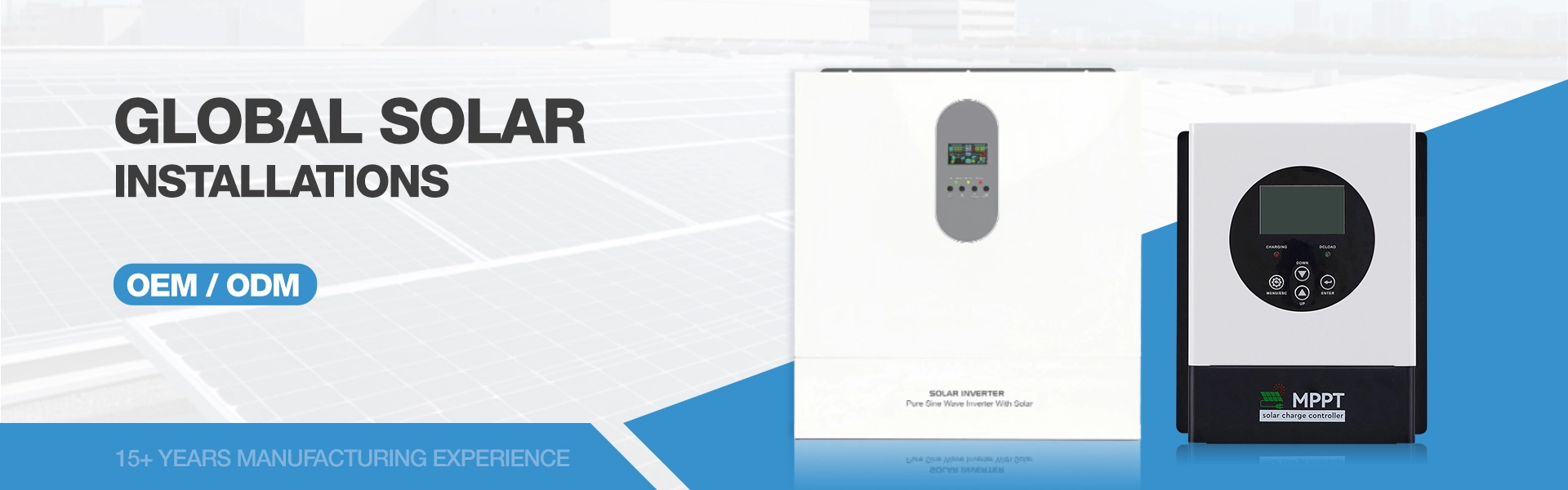
A Practical Guide to Selecting the Right MPPT Charger for Lithium Batteries
As more households, RV users, and small off-grid systems switch to lithium batteries, the demand for reliable MPPT (Maximum Power Point Tracking) chargers continues to rise. MPPT chargers play a critical role in harvesting solar energy efficiently and ensuring lithium batteries receive accurate, stable, and safe charging.
However, not all MPPT chargers perform the same. Their internal algorithms, protection functions, and compatibility can dramatically affect battery lifespan and system efficiency. This guide breaks down the essential factors you should evaluate before choosing an MPPT charger for lithium batteries.
1. Charging Logic and Control Strategy
Understanding the Charging Process
A quality MPPT lithium charger does not simply transfer energy—it manages the charging curve with precision. Instead of relying on a single-stage charging method, advanced chargers use a dynamic charging strategy tailored for lithium chemistry.
A well-designed charger typically adjusts:
-
Bulk charging: Rapid energy absorption
-
Absorption stage: Voltage stabilization to reach full capacity
-
Float/standby mode: Maintaining battery health without overcharging
Lithium batteries respond best to stable and accurate voltage control, so the charger’s internal algorithm has a direct impact on long-term performance.
2. MPPT Tracking Performance and Efficiency
How Efficient Energy Tracking Makes a Difference
MPPT technology ensures solar panels always operate at the most productive voltage and current point. However, some chargers track this point faster and more accurately than others.
When comparing MPPT chargers, pay attention to:
-
Real conversion efficiency (%)
-
Tracking response speed
-
Performance under weak light or cloudy conditions
Higher efficiency means:
-
More usable energy from the same solar array
-
Shorter charging time
-
Better performance during early morning / late afternoon hours
For systems relying heavily on solar—especially in remote or low-sunlight regions—MPPT efficiency is one of the most important comparison factors.
3. Lithium Battery Compatibility
Not All Chemistries Share the Same Requirements
Lithium batteries come in several chemistries, and each one needs a specific charging profile.
Common lithium chemistries include:
-
LiFePO₄ (most stable and widely used for solar systems)
-
Lithium-ion (NMC/NCA)
-
Lithium-titanate (LTO)
A suitable MPPT charger should allow:
-
Adjustable charging voltage
-
Adjustable cut-off voltage
-
Pre-configured lithium battery modes
A charger that does not match your battery chemistry may lead to reduced capacity, shortened lifespan, or battery protection triggers.
4. Built-In Protection and Safety Functions
Why Safety Features Matter
Lithium batteries are powerful and sensitive to incorrect charging. A reliable charger must include protective functions to prevent system failures or safety issues.
Key protections to look for:
-
Overcharge protection
-
Temperature protection
-
Reverse polarity protection
-
Short-circuit and overload safeguards
These protections not only protect the battery, but also safeguard the charger, wiring, and connected devices.
5. Smart Monitoring and Communication Options
Real-Time Insights Improve System Management
Modern MPPT chargers often come with digital monitoring to make system management easier.
Useful communication features include:
-
RS485 for integration with inverters or BMS
-
WiFi / Bluetooth APP for phone monitoring
-
Adjustable parameters through PC or mobile tools
Remote monitoring helps users:
-
Check charging status anytime
-
Identify faults quickly
-
Optimize system performance over time
For off-grid homes, RVs, or industrial systems, monitoring is not just convenient—it’s essential.
Final Thoughts
Selecting the right MPPT charger for a lithium system requires more than checking the amperage rating. By evaluating charging logic, MPPT efficiency, battery compatibility, safety functions, and smart monitoring, you can choose a charger that protects your investment and ensures stable long-term performance.
A well-matched MPPT charger helps lithium batteries operate more efficiently, last longer, and deliver reliable power across all conditions—making it a crucial part of any modern solar energy system.
Interested in MPPT Lithium Chargers for Your Projects? Work Directly With a Professional Manufacturer
If you’re sourcing MPPT chargers for lithium battery systems—whether for residential use, RV power kits, telecom solutions, or industrial applications—partnering with a reliable manufacturer can make all the difference.
Yingke has 13 years of experience in MPPT charge controllers, hybrid inverters, UPS systems, and complete off-grid solutions. All products are certified with CE, FCC, and RoHS, and support full customization such as OEM branding, parameter adjustments, private molds, and tailored communication protocols (RS485/BMS).
We supply a complete range of 20A–120A MPPT controllers with automatic voltage recognition, high conversion efficiency, and professional lithium-battery support—ideal for dealers, wholesalers, and solar project contractors across South America, Africa, and Southeast Asia.
📩 Looking for wholesale pricing or ready to become a distributor?
Feel free to contact us anytime for quotations, catalog downloads, or technical consultation. Our team will support you from product selection to long-term cooperation.